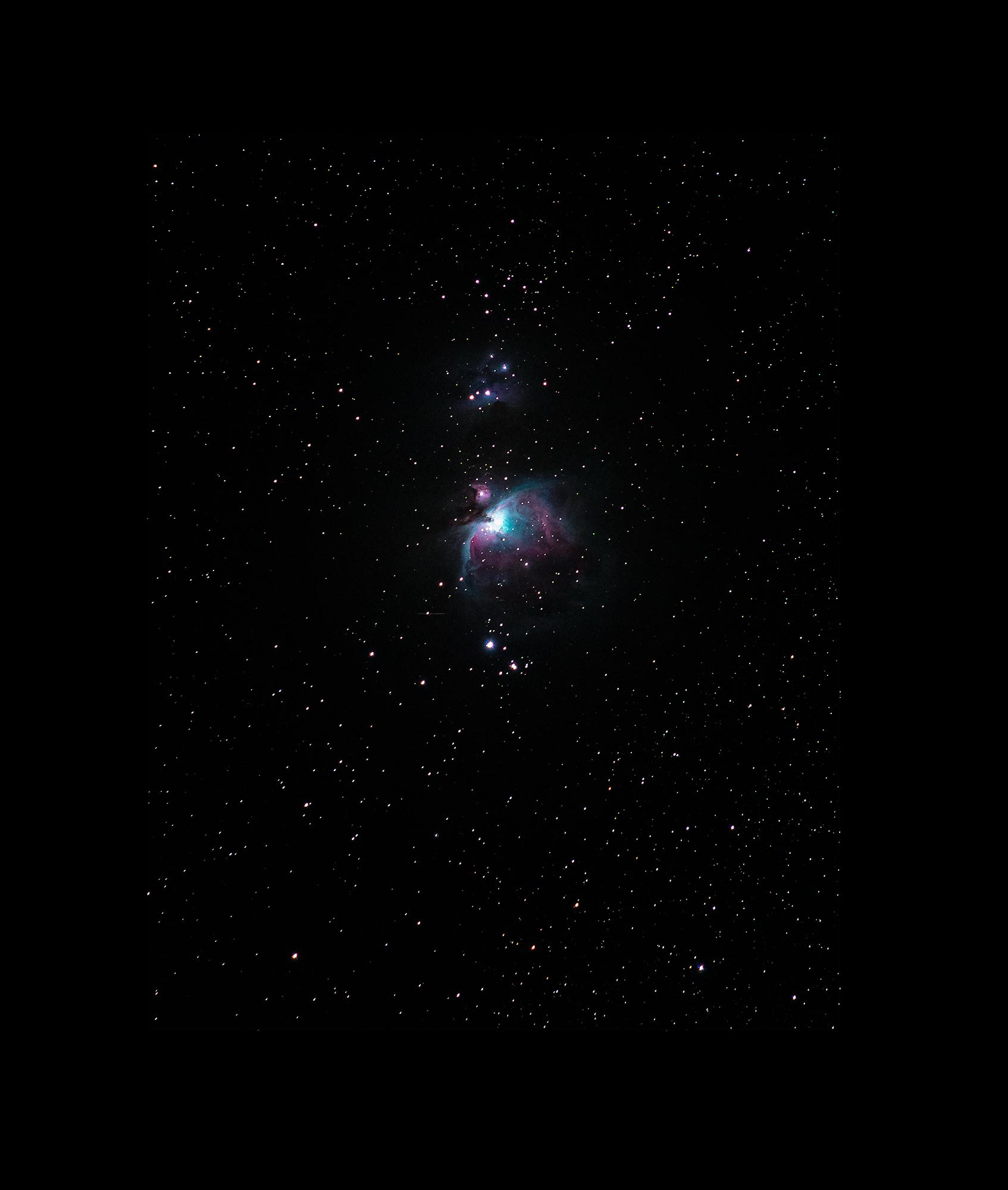
Cells i / 細胞 i
1050mm x 1240mm
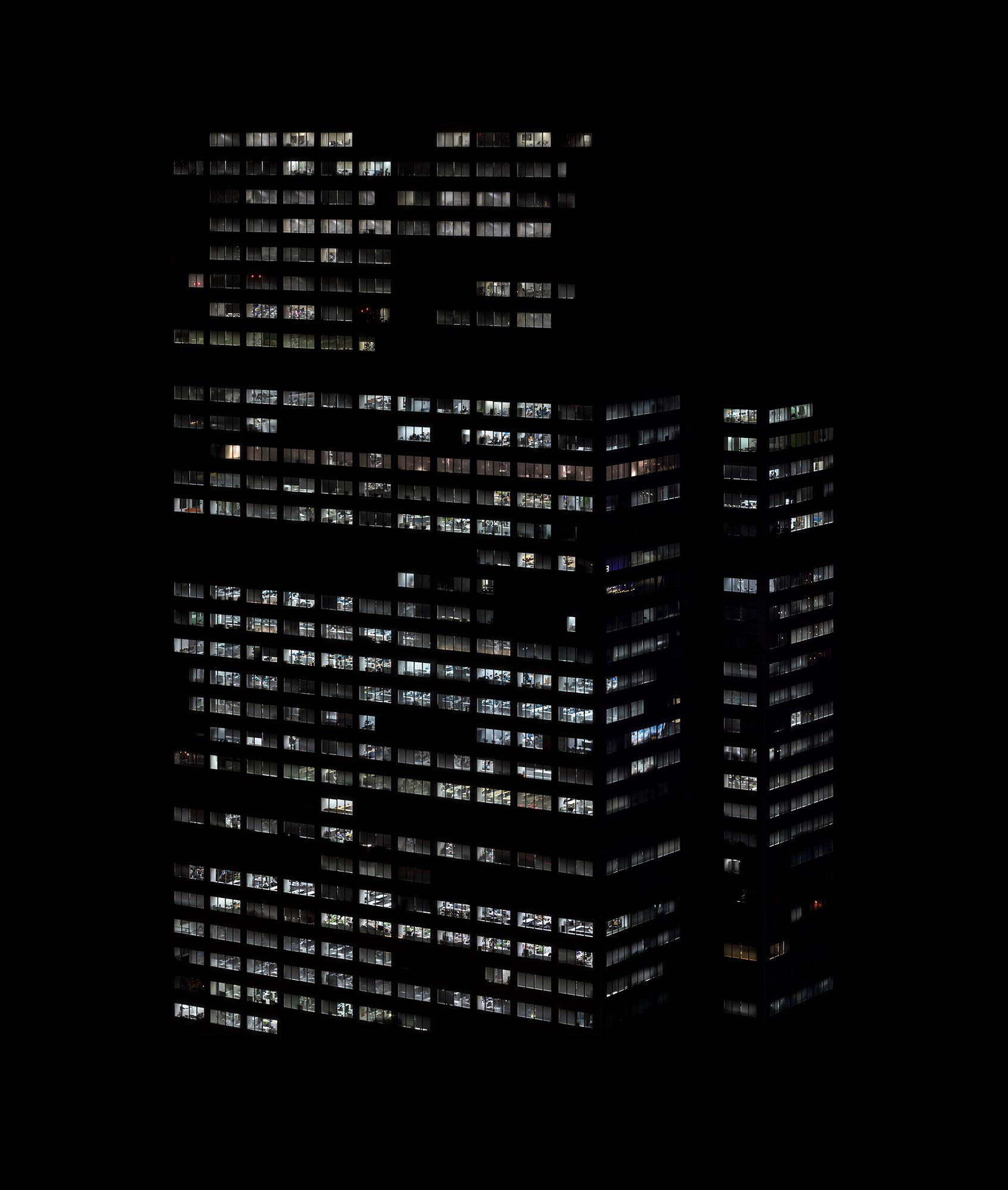
Cells ii / 細胞 ii
1050mm x 1240mm
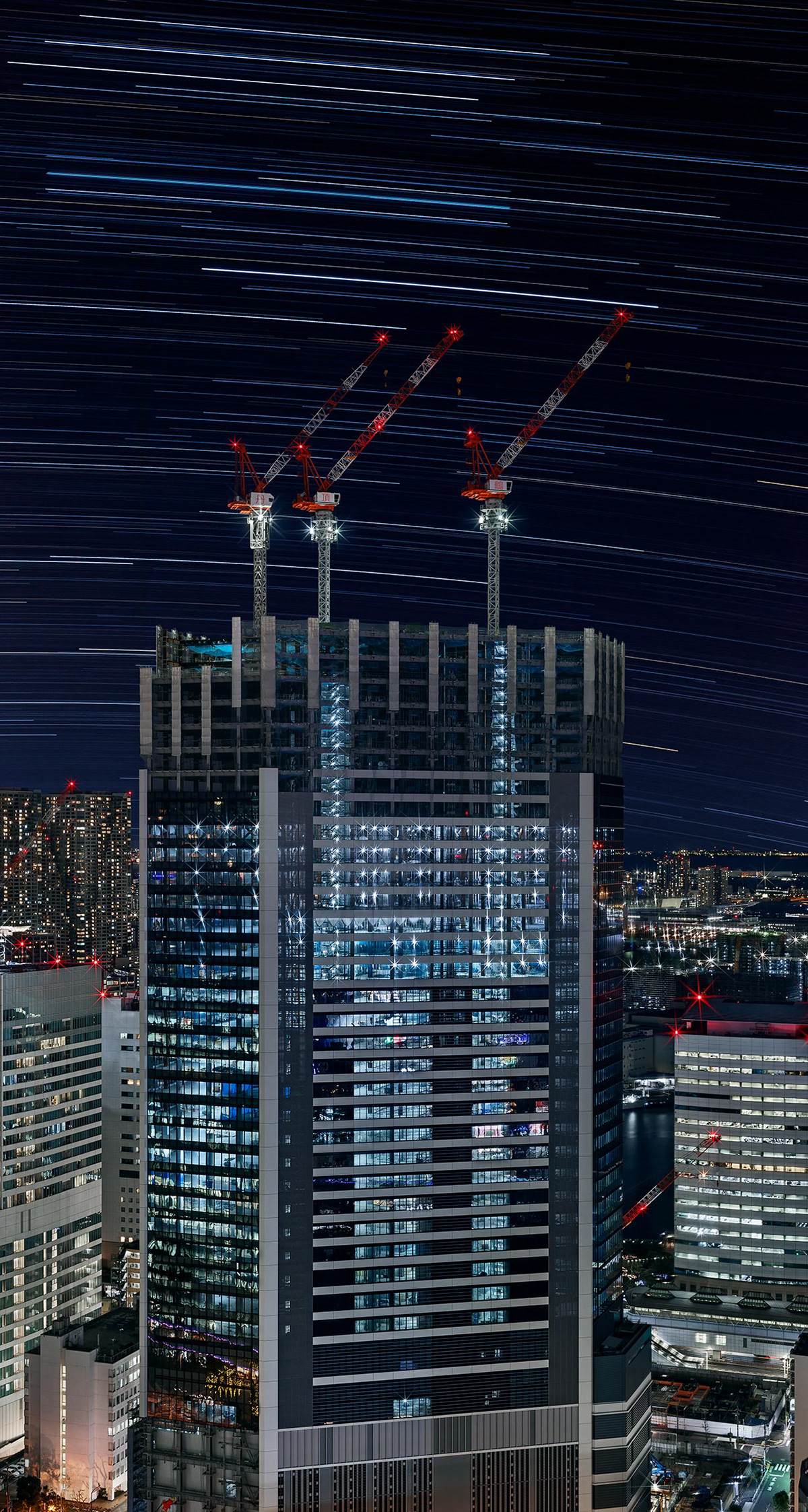
Red Crowned Cranes i / 丹頂鶴 i
910mm x 1700mm
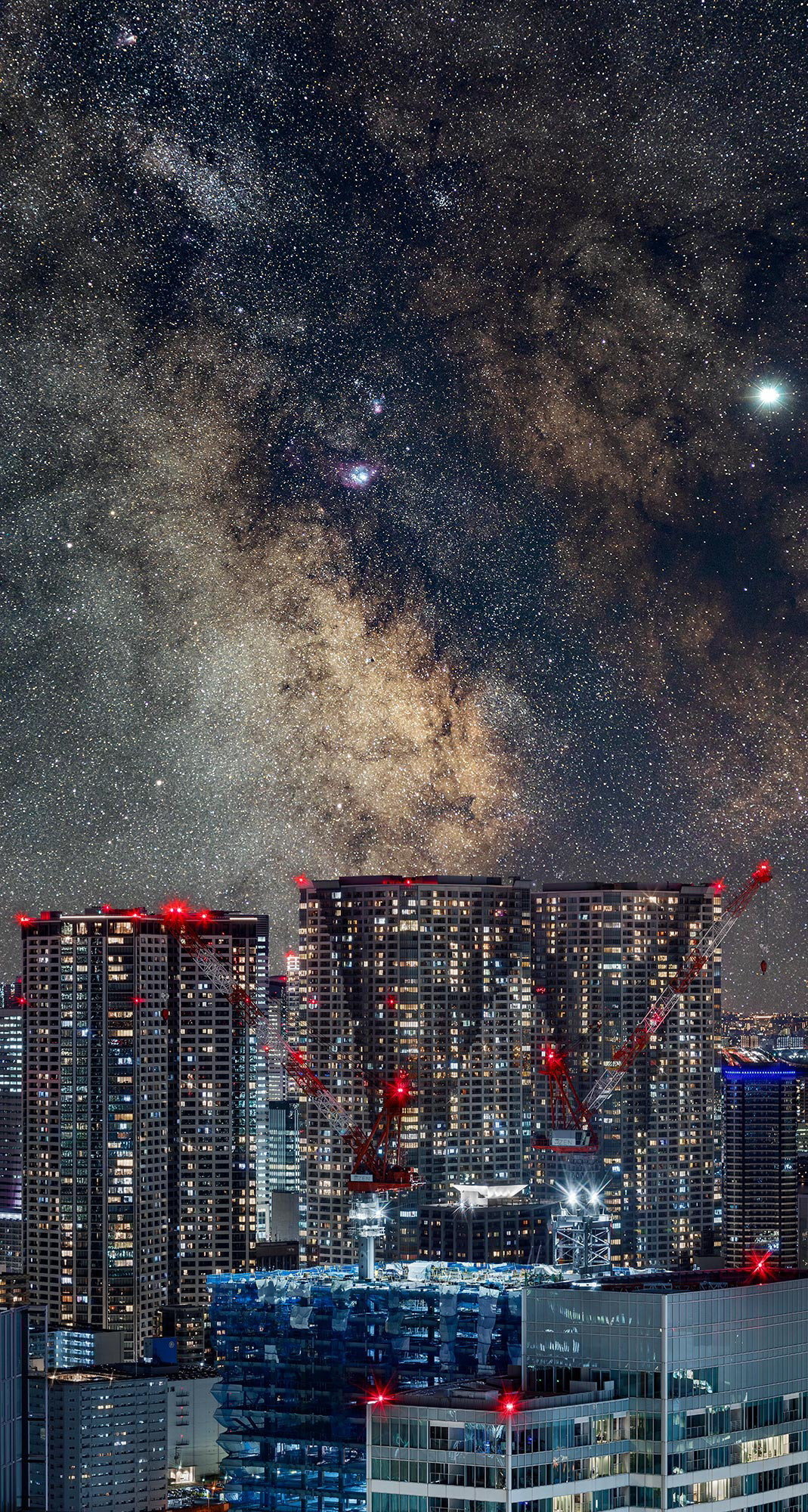
Red Crowned Cranes ii / 丹頂鶴 ii
910mm x 1700mm

Nakagin Capsule Tower / 中銀カプセルタワー
910mm x 1700mm
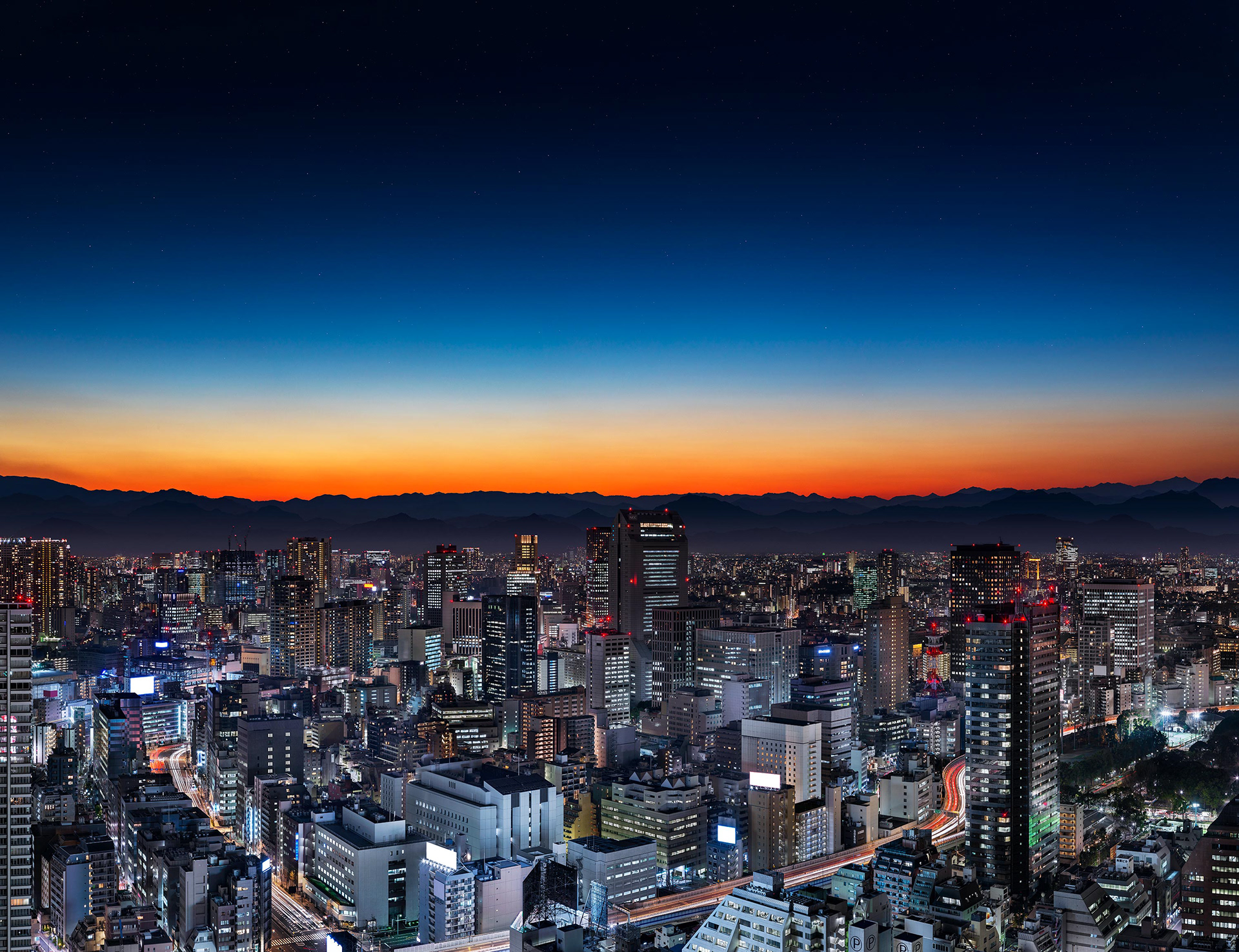
Twilight Horizon / 夕暮れの地平線
2420mm x 1820mm
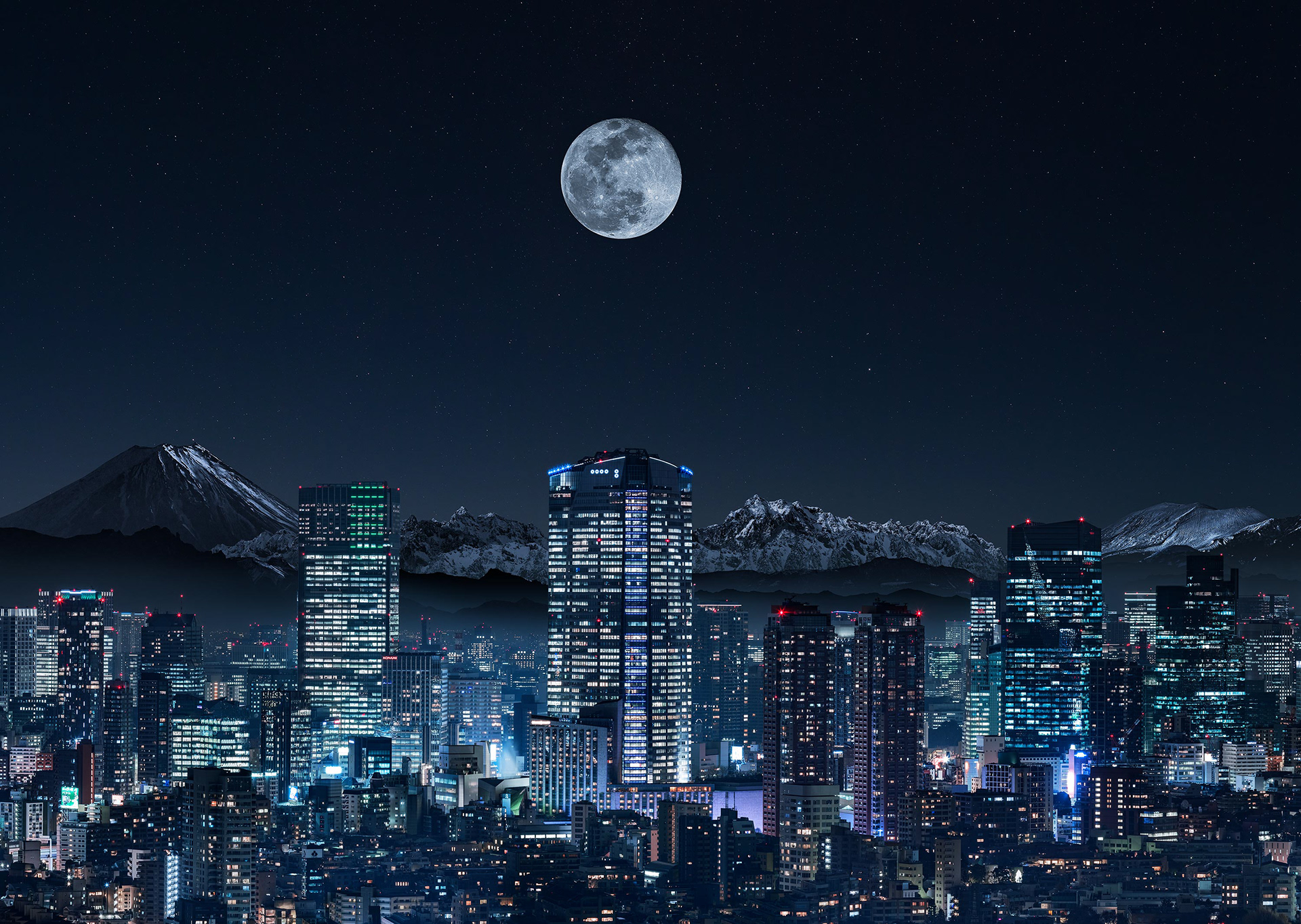
Midnight in a Perfect World / 理想郷の夜半 **
2100mm x 1500mm
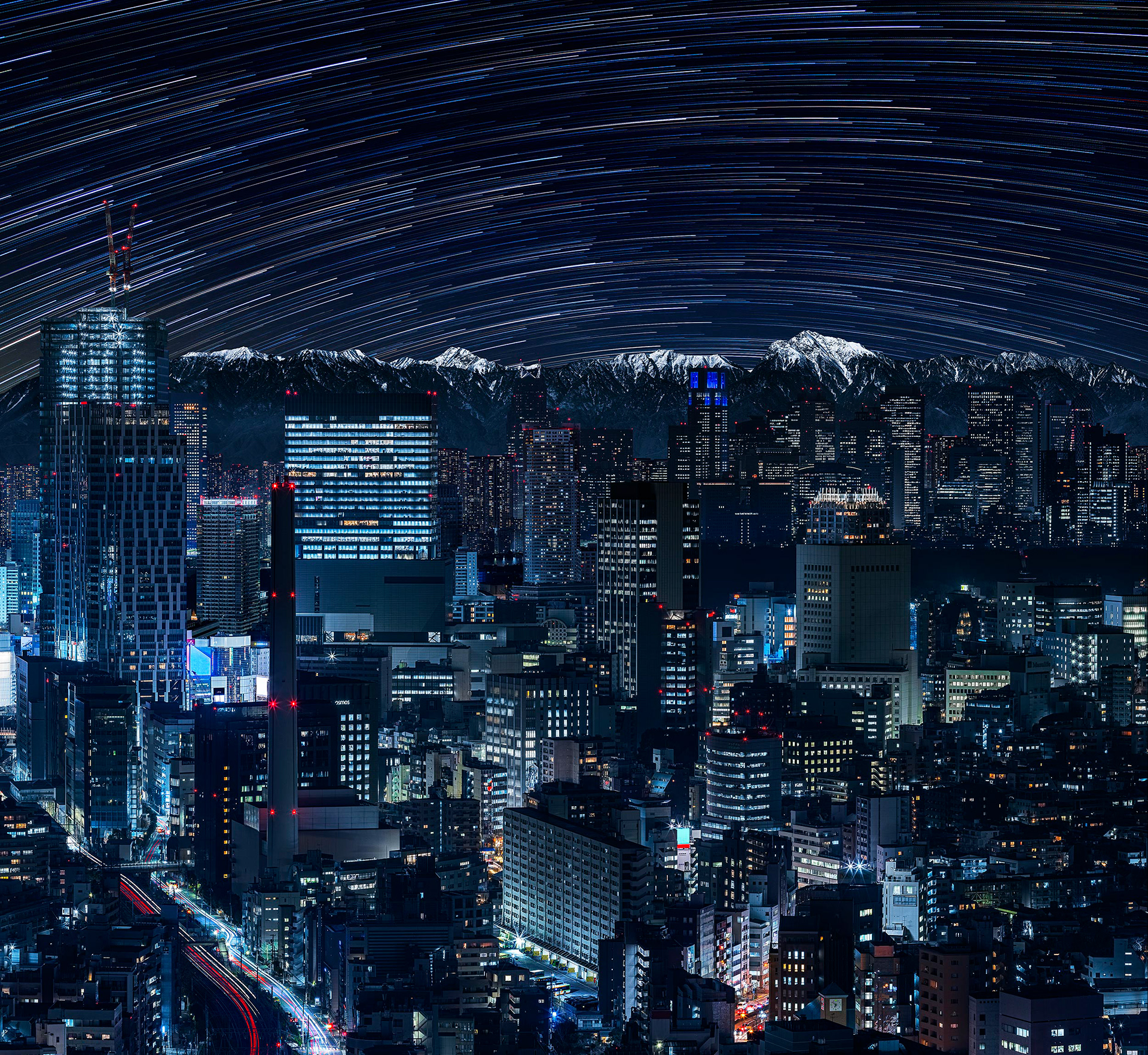
Holonic / 調和
1820mm x 1680mm
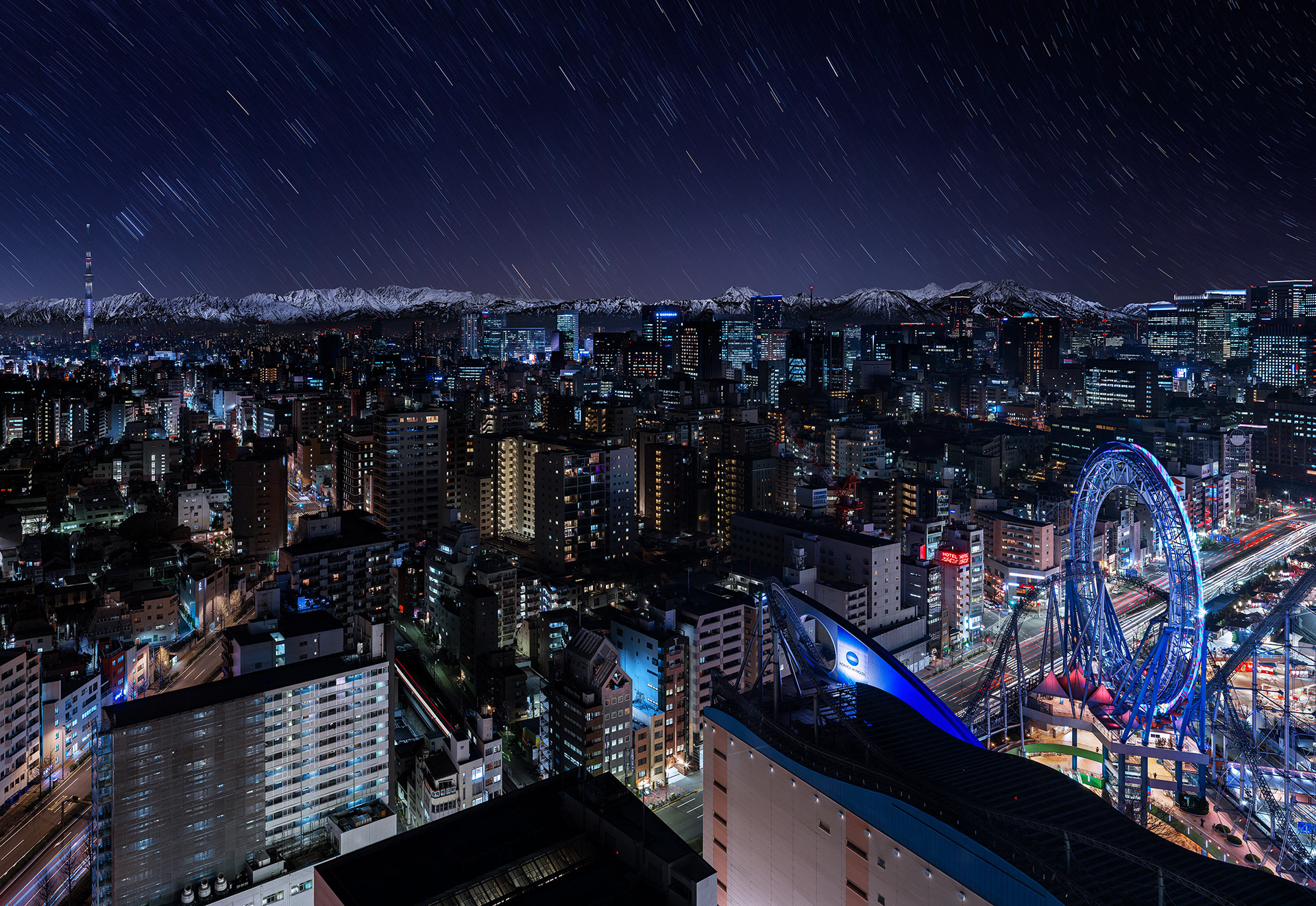
Timeless / 永遠 **
3000mm x 2100mm
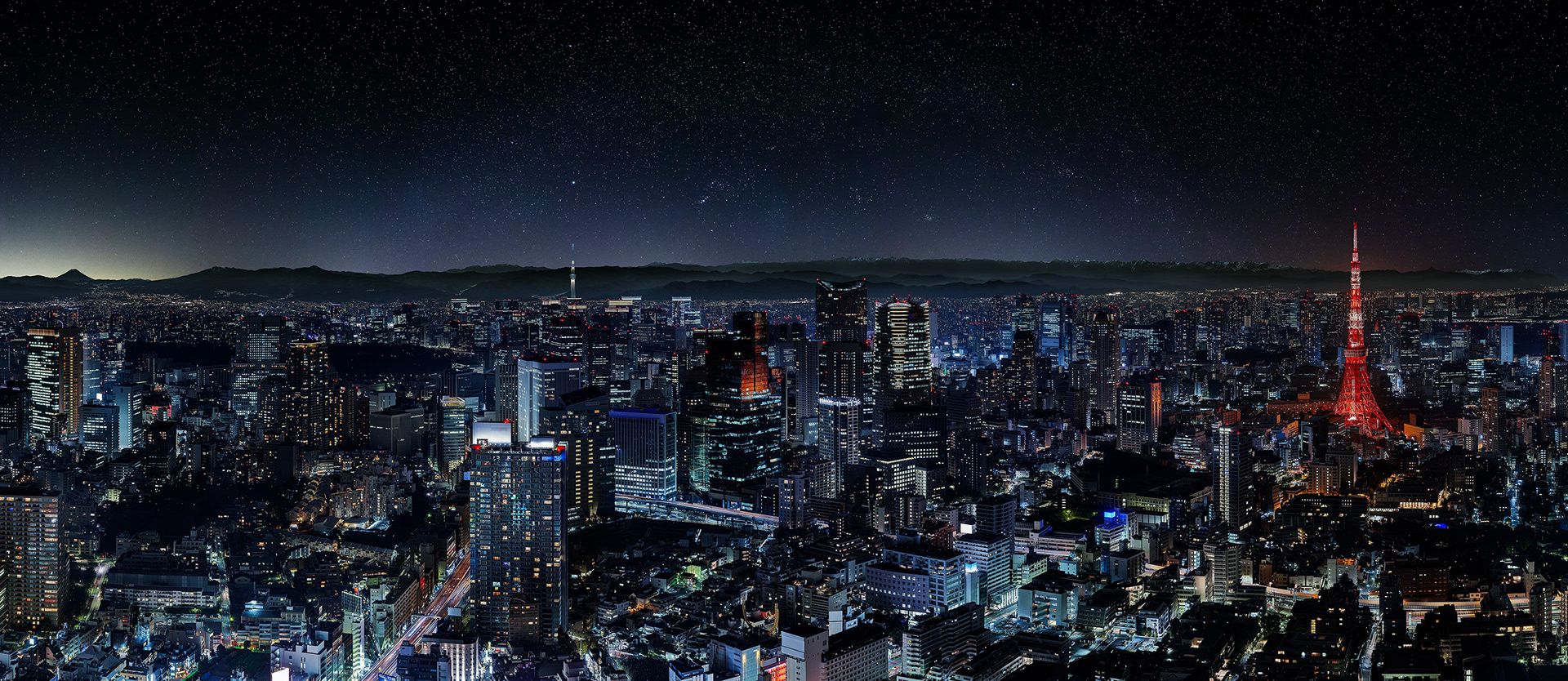
Journey to the End of the Night / 夜の終わりに向かう旅 **
3750mm x 1500mm
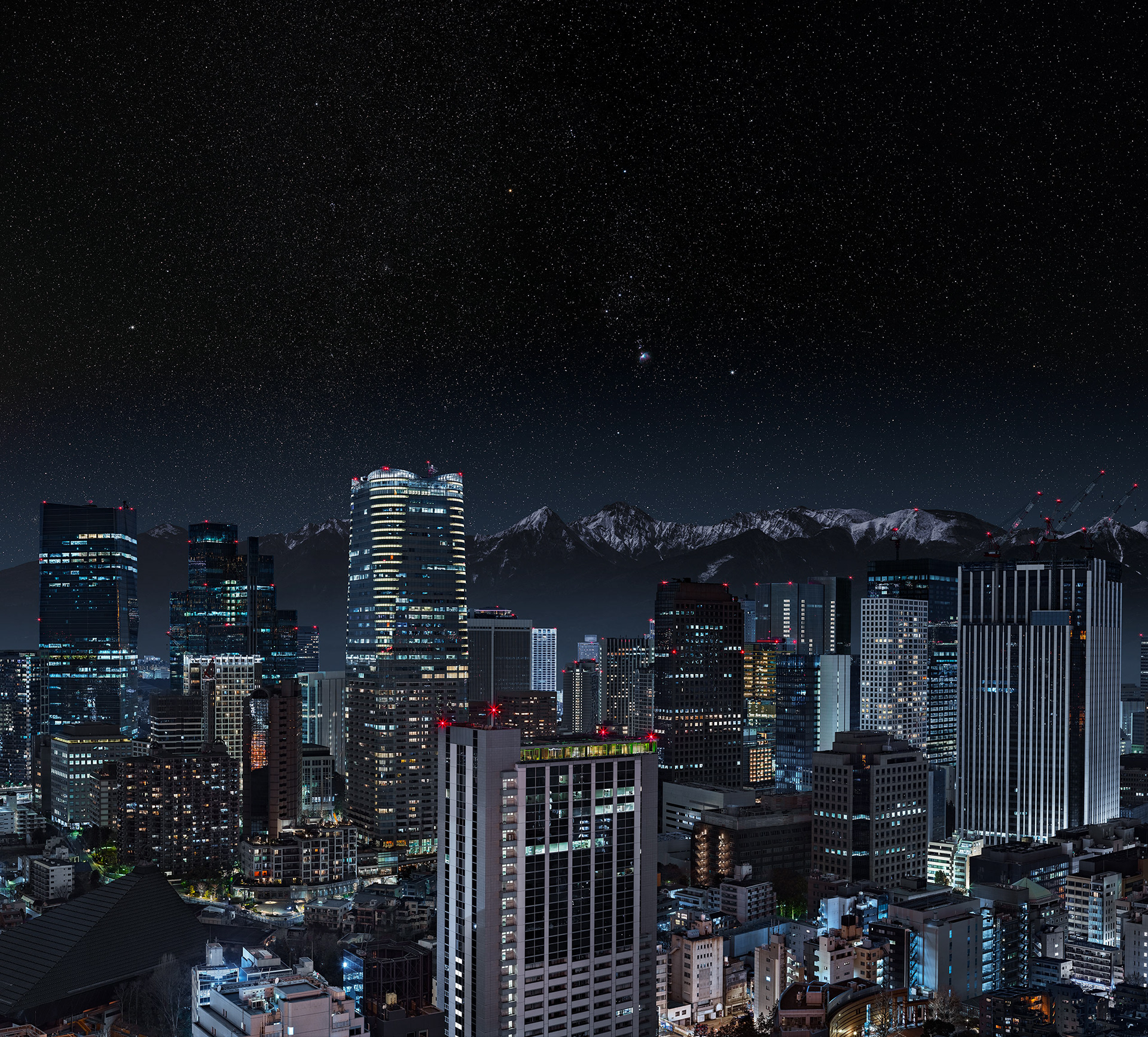
Meiso / 瞑想
3150mm x 2840mm
SHIZEN: Night emerged as a continuation of my earlier projects. Land of Technology had focused on Tokyo’s futuristic nightscapes, while A Classroom with a View explored the rural, daytime landscapes of Nagano. Living between these two environments, I instinctively began to digitally merge them into single images, bringing city and mountain together within one visual plane.
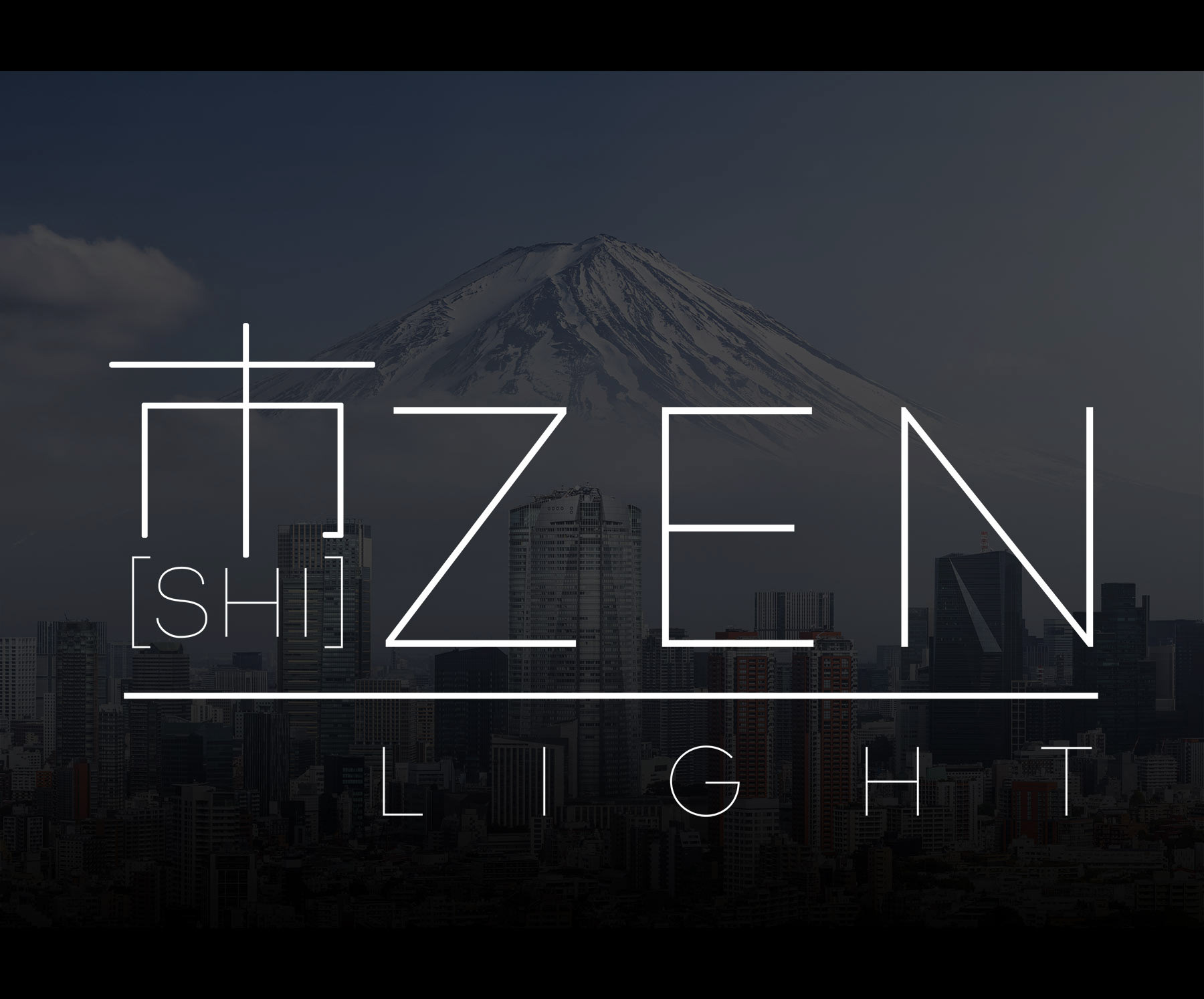
The project required me to learn how to use a star tracker to photograph the night sky. Long hours spent under the stars led me to realise these images might evoke the “overview effect”—the shift in perspective astronauts describe when viewing Earth from space. Although never my original intent, the combination of city lights, mountains, and stars seemed to invite such associations, giving rise to the title SHIZEN — a fusion of 市 (shi, city) and 自然 (shizen, nature).
私のこれまでのふたつのプロジェクト――東京の未来的な夜景に焦点を当てた『Land of Technology』と、長野の農村に広がる昼の風景を探求した『A Classroom with a View』――を引き継ぐ形で『市[shi]ZEN: Night』は生まれました。これら二つの環境のあいだで暮らすうちに、私は自然とそれらを一枚のイメージに統合し、都市と山をひとつの画面に収めるようになりました。
このプロジェクトでは、夜空を撮影するために赤道儀の使い方を習得する必要がありました。星空の下で長い時間撮影しているうちに、これらの写真が「オーバービュー効果」を想起させるのではないかと気づきました。つまり、宇宙飛行士が宇宙から地球を眺めたときに感じる、視点の変化のことです。当初はまったく予期していなかったものの、都市の光、山々、星々を組み合わせることで、そのような連想が自然と生まれ『市[shi]ZEN』というタイトルに繋がりました。これは、市(shi, city)と自然(shizen, nature)の融合を意味しています。
Curatorial Statement
Koumi Highland Museum of Art
Kazufumi Suzuki
Koumi Highland Museum of Art
Kazufumi Suzuki
Sam Pritchard's 市[shi]ZEN
When viewing a landscape from a great height, what is it that we truly see? Do we take in the entire scene at once, as though grasping the composition of a single painting, or do we observe it in detail, finding pleasure in small discoveries? In either case, such a perspective—so far removed from our everyday viewpoint—contains far more information than a single individual can comfortably process. Our sense of spatial awareness begins to falter. While we may describe it with words like “beautiful” or “grand,” these feel insufficient; beneath them lies a quiet tension and a sense of awe. This sensation, which might be described as a sense of wonder, arises from encountering the remarkable workings of nature, and it is something anyone can experience through a direct and instinctive response, beyond conscious observation.
When faced with such a landscape, I find myself unconsciously searching for a place to belong. Even if distance and obstacles make it impossible to see clearly, I can still sense where things are—through direction, or simply by the atmosphere of the place. Beyond those mountains might lie the town where I live. In another direction is the place where I was born; elsewhere are friends’ homes. It is not that I wish to return, but rather that I do not want to forget. If I were to name this feeling, it might be nostalgia—a quiet longing tied to one’s place of origin. Even within a vast and overwhelming landscape, we seek out places connected to ourselves, perhaps in search of a sense of comfort.
This was the first feeling I experienced when encountering Sam Pritchard’s 市[shi]ZEN series—there is no real difference in sensation between looking out over an actual natural landscape and encountering these constructed images. Both give rise to the same kind of awareness.
This was the first feeling I experienced when encountering Sam Pritchard’s 市[shi]ZEN series—there is no real difference in sensation between looking out over an actual natural landscape and encountering these constructed images. Both give rise to the same kind of awareness.
Looking again at 市[shi]ZEN, the sky, mountains, and city each assert their own presence, yet are brought together into a single, unified image. The sky may be understood as vast outer space; the mountains as landforms uplifted through tectonic forces; and the city, covering the surface of the earth, as the embodiment of human activity. Each of these elements emerged and developed over vastly different spans of time, yet all can be seen as part of the natural world. While the city—an artificial construct—might appear to stand in opposition to what we call “nature,” this distinction may simply reflect a human-centred perspective. Within the broader history of the universe, life emerged on Earth, evolved, and gave rise to humanity. As human civilisation flourished and spread across the planet, it transformed its environment, constructing structures upon the earth’s surface and forming societies. In this sense, even human activity may be considered part of “nature” in its most expansive definition—one that encompasses the entire universe.
The character “市” (shi, meaning “city”) in the title is particularly evocative. It denotes an urban centre with a large population, and, as in the word ichiba (“market”), suggests a place of exchange and gathering. The lively, dynamic image of the city reflects the very nature of human society. Yet within these works, we are made aware of the apparent absence of people in a space that would ordinarily symbolise human activity. As the focus is placed on the city itself, human figures become almost imperceptible, while textual elements that indicate human presence—such as signage, advertisements, and building names—have been deliberately removed through retouching. This emphasises both the complexity and the impersonal quality of the urban structure. The “city” itself comes to symbolise human life and the development of society, standing as an overwhelming sign of human existence. In contrast to this contemporary “natural” landscape of human society, the mountains that rise in the background—often capped with snow—do not oppose the city, but exist alongside it as parallel formations of the Earth. The urban landscape is modeled on Tokyo, while the mountains are those of Nagano; yet both the mountains, formed through geological forces, and the buildings, constructed by human hands, rise from the same ground, making their differences feel less distinct.
In these scenes—where fantasy and subtle dissonance coexist—Sam Pritchard has spoken of experiencing the “overview effect.” Known through the accounts of astronauts who have viewed the Earth from space, this phenomenon describes a shift in perception: an awareness that Earth, nature, and life are all interconnected—that “everything is one.” Perhaps it is this very awareness that is conveyed through 市[shi]ZEN. For most people, who have never traveled to space, this remains an experience that can only be approached through shared sensation and imagination. Precisely for this reason, the landscapes presented in 市[shi]ZEN stimulate the imagination and invite new realisations.
The universe, the sky, the mountains, and the city—each exists as an independent symbol, yet all are materialised and constructed as metaphors for the broader concept of “nature.” The world that emerges from this union is a landscape unlike any ever seen before. Within it, both the artist, who creates these images, and the viewer who stands before them are drawn into the world of 市[shi]ZEN, becoming part of a larger, unified existence.
キュラトリアル・ステートメント
小海町高原美術館
鈴木一史
サム・プリチャードの《市 [shi]ZEN》
小海町高原美術館
鈴木一史
サム・プリチャードの《市 [shi]ZEN》
高いところから俯瞰して景色をみたとき、人は何を見つめるのか。全景を広く視界に収め、一枚の絵画の構図のように捉え るのか、もしくは細かく観察して一部の発見を楽しむのか。どちらにせよ日常の目線とはかけ離れた高度と広い視界は、一個 体の小さな小さな人間に受け入れられるとは到底思えないほどの情報が詰め込まれており、空間認識力がバグる。美しい、ま たは壮大という言葉で例えられてしまう安い感動を表しつつも、常に一定の緊張感と畏怖の念を押し殺していなければならな い。このセンス・オブ・ワンダーともいえる感覚は、自然の摂理を驚異的に捉えることでもたらさせる美の受容であり、それ は観察や鑑賞以上に率直な感受性によって誰もが体験することができる。
そのような景色と直面した時、私の場合は無意識に住処を探す。広大な範囲と距離、遮蔽物によって直接視認することは不 可能だとしても、方角や雰囲気で何となく感じ取れるものがある。あの山の向こうに自分の住む町があり、そして家があるか もしれない。こっちの方には生まれ故郷がある。あっちの方には友人もいる。帰りたいわけではないが、忘れないようにして いること、これを言葉で示すのであれば〝望郷”だろうか。そしてそれは、壮大な景色の中にでも自身に由来する場所を探し てしまうという安らぎの追求なのだろう。これが私がサム・プリチャードの作品《市 [shi]ZEN》シリーズをみたときに一番初 めに抱いた感覚であった。それは実像としての自然風景の眺望と、偶像としての作品画面との間に感覚の隔たりはなく、いず れからも呼び起こされる意識であるに違いない。
そのような景色と直面した時、私の場合は無意識に住処を探す。広大な範囲と距離、遮蔽物によって直接視認することは不 可能だとしても、方角や雰囲気で何となく感じ取れるものがある。あの山の向こうに自分の住む町があり、そして家があるか もしれない。こっちの方には生まれ故郷がある。あっちの方には友人もいる。帰りたいわけではないが、忘れないようにして いること、これを言葉で示すのであれば〝望郷”だろうか。そしてそれは、壮大な景色の中にでも自身に由来する場所を探し てしまうという安らぎの追求なのだろう。これが私がサム・プリチャードの作品《市 [shi]ZEN》シリーズをみたときに一番初 めに抱いた感覚であった。それは実像としての自然風景の眺望と、偶像としての作品画面との間に感覚の隔たりはなく、いず れからも呼び起こされる意識であるに違いない。
あらためて《市 [shi]ZEN》をみる。空と山と都市がそれぞれの領域を主張しつつも、ひとつの景色としての重なりがフォト グラフィックで構築されている。画面上の空と山と都市を、それぞれ広大な宇宙空間、地殻変動により隆起した大地、地表を 埋め尽くす都市構造は人類の営みそのものであると捉えられる。それらは悠久ともいえる時間差でこの世界に誕生し、形成さ れてきた自然物でもある。人工物である都市は所謂“自然”とは相対する存在であるともいえるが、それは人間目線での考え 方なのだろう。宇宙規模の歴史の中で、地球という星に生命が誕生し、進化が促され、人類が生まれた。その人類が繁栄し、 星に溢れた人類はこれまでの環境を変化させ、地表に構造物を建てて社会を築いた。もはや宇宙全体をも包括する広義の意味 での“自然”である。
そして、タイトルに付けられた“市”という文字に惹かれる。この文字は人口の多い都市を示す漢字であり、また「市場」 という言葉が表すように、「商いが行われる場所」や「人々が集う場」という意味を持つ。賑やかで活気のある場所としての都 市像はまさに人間が構築する社会の姿そのものでもある。しかし、作中ではこの人の営みを象徴するはずの都市に人気がない ことにも気づかされる。都市そのものに主点が置かれることでほぼ認識できなくなる人の姿形、人の存在を証明する文字、す なわち看板や広告などの文字情報がレタッチにより故意に削除されたことが、都市構造の複雑さと無機質さを強調する。“都市” そのものが人の生活と発展した社会を象徴し、人が存在する圧倒的なシンボルとなる。この現代の人間社会という自然風景に 対して、背後に連なる山々の造形、雪を頂く姿は都市に相対するものではなく、地球上の造形物として並列する存在といえる。 この都市風景のモデルとなった東京のビル群、その背後にそびえる山脈は長野の山々であるが、地殻変動によってそびえる山、 人工的に作り出されそびえるビルは、どちらも地より立ち上がっている点で違いを感じさせない。
幻想と違和感が混在する景色の眺望、その画面の構築に対してサム・プリチャードは、オーバー・ビュー・エフェクトを感 じるものであると述べている。宇宙飛行士のみが知る景色、宇宙から地球を眺める体感をしたことで得られる地球や自然、生命、 これら“全てはひとつである”という意識がこの《市 [shi]ZEN》という作品をとおして伝えられているのではないだろうか。 宇宙に行ったことのない大多数の人々にとっては、感覚の共有でしか近づけない意識ではあるものの、だからこそ《市 [shi]ZEN》に映し出される景色を通して様々な想像を掻き立てられ、そして気づきが与えられるものだ。宇宙、空、山、都市、 これらはそれぞれがシンボルとして独立し、すべては“自然”という観念のメタファーとして素材化され構築されていく。そ れらがひとつになった世界は未だかつて誰もみたことのない景色であり、その景色を作り出すサム・プリチャードも、景色と 対峙する観賞者さえもが《市 [shi]ZEN》にまつわる人として、ひとつの大きな存在に取り込まれていく。
そして、タイトルに付けられた“市”という文字に惹かれる。この文字は人口の多い都市を示す漢字であり、また「市場」 という言葉が表すように、「商いが行われる場所」や「人々が集う場」という意味を持つ。賑やかで活気のある場所としての都 市像はまさに人間が構築する社会の姿そのものでもある。しかし、作中ではこの人の営みを象徴するはずの都市に人気がない ことにも気づかされる。都市そのものに主点が置かれることでほぼ認識できなくなる人の姿形、人の存在を証明する文字、す なわち看板や広告などの文字情報がレタッチにより故意に削除されたことが、都市構造の複雑さと無機質さを強調する。“都市” そのものが人の生活と発展した社会を象徴し、人が存在する圧倒的なシンボルとなる。この現代の人間社会という自然風景に 対して、背後に連なる山々の造形、雪を頂く姿は都市に相対するものではなく、地球上の造形物として並列する存在といえる。 この都市風景のモデルとなった東京のビル群、その背後にそびえる山脈は長野の山々であるが、地殻変動によってそびえる山、 人工的に作り出されそびえるビルは、どちらも地より立ち上がっている点で違いを感じさせない。
幻想と違和感が混在する景色の眺望、その画面の構築に対してサム・プリチャードは、オーバー・ビュー・エフェクトを感 じるものであると述べている。宇宙飛行士のみが知る景色、宇宙から地球を眺める体感をしたことで得られる地球や自然、生命、 これら“全てはひとつである”という意識がこの《市 [shi]ZEN》という作品をとおして伝えられているのではないだろうか。 宇宙に行ったことのない大多数の人々にとっては、感覚の共有でしか近づけない意識ではあるものの、だからこそ《市 [shi]ZEN》に映し出される景色を通して様々な想像を掻き立てられ、そして気づきが与えられるものだ。宇宙、空、山、都市、 これらはそれぞれがシンボルとして独立し、すべては“自然”という観念のメタファーとして素材化され構築されていく。そ れらがひとつになった世界は未だかつて誰もみたことのない景色であり、その景色を作り出すサム・プリチャードも、景色と 対峙する観賞者さえもが《市 [shi]ZEN》にまつわる人として、ひとつの大きな存在に取り込まれていく。
![市[shi]ZEN @ Komoro Kogen Museum of Art](https://cdn.myportfolio.com/3c8e7c90-61b9-4a18-9f57-ef4759156212/17d4a8a0-e873-4cc2-9fc9-b7935f2f87d2_rw_3840.jpg?h=804af31f504e93e2304e0c2130ad2ddd)
市[shi]ZEN @ Komoro Kogen Museum of Art
![市[shi]ZEN @ Komoro Kogen Museum of Art](https://cdn.myportfolio.com/3c8e7c90-61b9-4a18-9f57-ef4759156212/40e8090d-f8ad-4562-b3a5-4fcbd336441e_rw_3840.jpg?h=beb4b89d0700f74c1a7425a1f8b27e64)
市[shi]ZEN @ Komoro Kogen Museum of Art
![市[shi]ZEN @ Komoro Kogen Museum of Art](https://cdn.myportfolio.com/3c8e7c90-61b9-4a18-9f57-ef4759156212/e6ec142c-6869-4120-b988-5318774684f8_rw_3840.jpg?h=2e3f4ba12753d2b4aff3064770427092)
市[shi]ZEN @ Komoro Kogen Museum of Art
![市[shi]ZEN @ Komoro Kogen Museum of Art](https://cdn.myportfolio.com/3c8e7c90-61b9-4a18-9f57-ef4759156212/f97ec6fa-19d1-4aa2-8609-dd8f111a0aa3_rw_3840.jpg?h=4449ba8a1c37faeb749ced0266083f82)
市[shi]ZEN @ Komoro Kogen Museum of Art
Also be sure to check out...